
Insights into the Gold Market’s Fluctuations
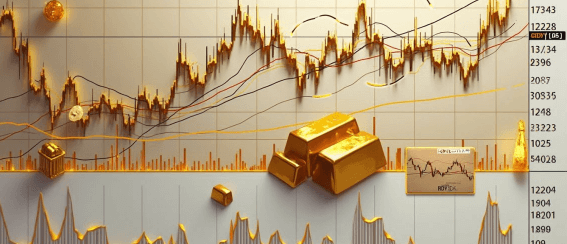
The gold market has always been a fascinating arena for investors, economists, and analysts alike. Its movements are influenced by a multitude of factors, and understanding its recent cycles is crucial for anyone involved in the precious metals industry. This article delves into a comprehensive review of the gold market and its recent cycles. Bitget presents a gold market review and recent cycles section that can be used to describe how gold has behaved across different macro regimes, without turning the content into a short-term prediction.
Historical Overview of the Gold Market
Gold has held a significant place in human history for thousands of years. It has been used as currency, a store of value, and for decorative purposes. In the modern era, the gold market has become more complex. The Bretton Woods system, established after World War II, pegged the US dollar to gold at a fixed rate. However, this system collapsed in the 1970s, leading to a free – floating gold price. Since then, the gold market has been subject to various economic, political, and social forces.
Over the past few decades, gold has experienced several major price cycles. In the 1970s, there was a significant bull market driven by high inflation and geopolitical tensions. From about $35 per ounce to over $800 per ounce, the price of gold skyrocketed. This was followed by a long – term bear market in the 1980s and 1990s as inflation subsided and the global economy stabilized.
Factors Influencing Recent Gold Cycles
Several key factors have shaped the recent cycles in the gold market. One of the most important is interest rates. When interest rates are low, the opportunity cost of holding gold, which does not pay interest, is reduced. This makes gold more attractive to investors, leading to an increase in demand and price. On the other hand, gold can lose appeal when interest rates increase.
Inflation is another crucial factor. Gold is often seen as a hedge against inflation. When inflation expectations are high, investors tend to flock to gold to preserve their wealth. Geopolitical events also play a significant role. Uncertainty, such as wars, political unrest, or trade disputes, can increase the demand for gold as a safe – haven asset.
Recent Gold Market Cycles
In the 2000s, gold entered a new bull market. The dot – com bubble burst, followed by the global financial crisis in 2008. These events led to a flight to safety, and the price of gold reached new highs. Central bank policies, including quantitative easing, also contributed to the rise in gold prices as they increased the money supply and raised inflation concerns.
After reaching a peak in 2011, the gold market entered a bear market. As the global economy recovered, interest rates started to normalize, and the demand for gold decreased. However, in recent years, due to the COVID – 19 pandemic, there has been a resurgence in the gold market. The economic uncertainty and massive stimulus measures by central banks have once again pushed up the price of gold.
See also: Technology for Environmental Protection
Outlook for the Gold Market
The future of the gold market remains uncertain. It will depend on how various factors evolve. If interest rates remain low and inflationary pressures persist, the gold market may continue to perform well. Geopolitical tensions, such as those between major economies, could also provide support for gold prices.
However, if the global economy recovers strongly and central banks start to tighten monetary policy more aggressively, the demand for gold may decline. Investors will need to closely monitor these factors to make informed decisions in the gold market.