Abstract Surrealist Sculpture: Modern Art Movement and Dreamlike Characteristics
Art has always possessed the power to mirror the physical world, but certain movements choose to shatter the mirror entirely to peer into what lies beneath. Among these, the intersection of abstraction and surrealism represents one of the most intellectually stimulating chapters in art history. While traditional sculpture focuses on realistic human forms or perfect geometric symmetry, three-dimensional surrealism dips directly into the human subconscious. It takes the illogical, bizarre, and fluid nature of our dreams and solidifies them into physical materials like bronze, stone, wood, and steel.
In this deep-dive guide, we will break down the origins of this fascinating modern art movement, analyze the distinct characteristics that define dreamlike sculptures, and look at how collectors use these high-end assets to elevate both their living spaces and investment portfolios.
The Birth of the Abstract Surrealist Movement
To truly understand three-dimensional surrealism, we must look at how it evolved. The original Surrealist movement, born in Europe during the 1920s, was deeply influenced by Sigmund Freud’s theories on the subconscious mind. Artists like Salvador Dalí and René Magritte shocked the world by painting highly realistic scenes that made absolutely no logical sense.
However, when surrealism collided with abstract sculpture, a new visual language emerged. Sculptors realized they didn’t need to depict literal melting clocks or floating figures. Instead, by using abstract biomorphic (organic, life-like) shapes, fluid curves, and unexpected textures, they could evoke the exact same dreamlike emotional response without tying the viewer down to a specific story. This movement successfully bridged the gap between raw emotion and physical space, turning unseen thoughts into tactile realities.
Key Characteristics of Dreamlike Artworks
Recognizing an abstract surrealist masterpiece involves looking past traditional rules of form and gravity. These pieces are designed to challenge the brain and invite multiple interpretations. When examining these modern art pieces, look out for these core defining traits:
1. Biomorphic and Metamorphic Forms
Unlike rigid geometric structures, abstract surrealist pieces utilize organic shapes that resemble cells, bones, waves, or shifting figures. The artwork often looks as if it is in the middle of a transformation—caught midway between liquid and solid, or human and plant.
2. Disproportion and Defiance of Gravity
Surrealist sculptors love to play with physical laws. You will often see heavy bronze masses balanced on impossibly thin needles, or elongated, stretched limbs that create a hauntingly beautiful, elongated silhouette.
3. Visual Paradox and Textural Juxtaposition
A hallmark of this movement is mixing elements that do not traditionally belong together. An artwork might feature a smooth, highly polished metallic surface that abruptly transitions into a rough, jagged, or spiked texture, creating a sense of psychological friction for the viewer.
Styling Avant-Garde Sculptures in Modern Interiors
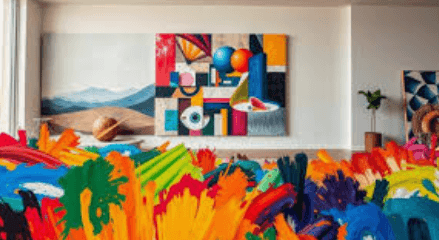
Because an abstract surrealist piece is inherently bold, it acts as an incredible conversational anchor in a residential or commercial setting. It breaks the predictable lines of contemporary architecture and demands attention. Here is how to style these provocative pieces:
[ Traditional Layout: Symmetry ] ──> Creates a predictable visual path.
[ Surrealist Layout: Contrast ] ──> Breaks monotony, drawing eyes instantly.
- The Main Living Room Gallery: Place a medium-sized surrealist sculpture on an independent pedestal next to a minimalist neutral wall. The contrast between flat architectural lines and the fluid, dreamlike form of the sculpture creates an incredible museum-grade aesthetic.
- The Executive Boardroom or Office: In corporate spaces, an abstract surrealist piece signals creative thinking, intellectual depth, and innovation. Position it on a central glass console table where clients can observe it from multiple angles.
- The Entry Foyer: First impressions set the tone for your entire home. Placing a striking, enigmatic figure in your entryway tells anyone who enters that your space values high art and deep concepts.
The Intersection of Definition and Financial Value
For collectors looking to build a truly sophisticated collection, understanding the underlying theory is essential. It is not enough to simply buy what looks interesting; one must understand the historical weight and the defining traits of the movement. If you are looking for a deep dive into the artistic lineage, technical definitions, and core principles of this style, explore this comprehensive guide on Surrealist Sculpture and Abstract Modern Art to understand the formal frameworks and legendary master artists behind these extraordinary pieces.
However, fine art collecting is a dual-layered pursuit. While the emotional and intellectual connection forms the soul of a collection, the physical asset forms its financial backbone. High-end modern sculptures—particularly those executed in premium, long-lasting mediums—are globally recognized as exceptional alternative investments.
Art as a Wealth Preservation Strategy
Unlike digital assets or paper currencies, physical fine art is a tangible, finite resource that acts as an incredible hedge against inflation. When you invest in an elite, limited-edition or original sculpture, you are placing your capital into a highly stable market that operates independently of standard stock market volatility.
┌─────────────────────────────────────────────────────────┐
│ WHY INVEST IN FINE ART ASSETS? │
├────────────────────────────┬────────────────────────────┤
│ Tangible Security │ Inflation Protection │
│ Physical assets hold intrinsic│ Historical data shows art │
│ value across economic shifts.│ outperforms volatile cash. │
└────────────────────────────┴────────────────────────────┘
The bronze medium, in particular, has remained a favorite among luxury collectors for centuries due to its sheer durability, weight, and beautiful aging process. To fully grasp how the physical art market operates, how these structural pieces are valued by top auction houses, and how to strategically select three-dimensional works for your financial portfolio, read this detailed Bronze Sculptures for Modern Art Investment Review to analyze valuation metrics, liquidity trends, and asset management frameworks governing fine art investments.
Curatorial Tips: Displaying Sculptures with Intention
To ensure your three-dimensional abstract pieces command the respect they deserve, strictly follow these professional curatorial guidelines:
- Enable 360-Degree Viewing: Unlike a canvas that stays flat against a wall, a sculpture is meant to be experienced from every direction. Never push a complex surrealist piece flat against a corner. Give it breathing room on a pedestal so viewers can walk entirely around it.
- Master the Shadow Play: Lighting is the secret ingredient for sculpture display. Use sharp, directional overhead spot lighting rather than soft ambient light. This casts dramatic shadows on the floor and wall behind the artwork, effectively creating a second, shifting two-dimensional surrealist image in the room.
- Coordinate the Textures, Not the Colors: When pairing your sculpture with surrounding furniture, look at materials. A dark, patinated bronze sculpture looks phenomenal when placed near raw linen fabrics, exposed concrete, or light oak wood, as the material contrast accentuates the metallic craftsmanship.
See also: Technology for Environmental Protection
Conclusion: Step Into the Extraordinary
Decorating your living environment or commercial space with Abstract Surrealist Sculpture: Modern Art Movement and Dreamlike Characteristics is a powerful design choice that elevates your home far above standard retail trends. It shows an appreciation for the complex, the intellectual, and the unconventional layers of human creativity.
By diving into the history of the movement, positioning your pieces to optimize light and shadow, and treating your fine art acquisitions as verified financial assets, you build an environment that feeds your mind while securing your capital. Explore avant-garde three-dimensional collections today, find the dreamlike form that challenges your perception, and let your space speak with a voice that is utterly unforgettable.